
Mehmon · the guest
Mehmon otangdan ulug‘.
“The guest is greater than your father.” An Uzbek proverb.
Every child in Uzbekistan grows up with that proverb. The guest takes the place of honor, farthest from the door. The host pours the first cup of tea and breaks the bread with their own hands. It is the most generous rule I know, and it is not free.
When I guided visitors through Samarkand in 2024, I saw both sides of it. Eleven strangers had questions at Shah-i-Zinda, so we stayed past lunch, and my dinner went cold at home. I didn’t mind. But somebody always pays for a guest’s comfort, and in a hotel it is usually somebody the guest never meets.
That is the part of hospitality I work on. The housekeeper on the basement floor. The engineer on call. The night auditor. The receptionist whose name the guest has forgotten by the time they reach the airport. A ledger records what they cost. It almost never records what they did.
The city is filling with guests
Uzbekistan has set out to double its foreign visitors, from 10 to 20 million a year by 2030, and to lift tourism from 3.5% to 7% of GDP. At Air Marakanda, my own projection put tourism service exports from the Samarkand region above $1.2 billion this year.
But look at who is building the new rooms. Of the 962 places to stay that opened in Uzbekistan in 2025, 136 were hotels. The other 826 were family guesthouses and hostels: the same guests, the same proverb, and almost none of the systems.
- 20Mforeign visitors a year, Uzbekistan’s 2030 target, up from 10M
- 826 of 962new places to stay in 2025 that were guesthouses or hostels, not hotels
- $1.2B+my projection for Samarkand region tourism exports in 2026
Sources: presidential resolution of 20 November 2025, via Gazeta.uz; 2025 accommodation figures via Kursiv. The last figure is my own estimate.
What I want to build
Affordable, offline-capable software for the independent hotels and guesthouses of Central Asia. The housekeeping reporter, the guest message, the tax calendar, rebuilt for a twelve-room guesthouse with one unreliable router and a family running the front desk. And the marketing that makes invisible service visible, because the videos taught me that attention is where service starts.
What I want to learn next
- Operations, from the manager’s side. I’ve seen housekeeping through a phone camera. I want to push the cart, run a floor, and understand the decisions made above it.
- Hospitality analytics. I already ship Python to production. I want to point it at the questions hotels actually live by: demand, pricing, staffing.
- Services marketing. A quarter of a million strangers taught me some of it by instinct. I want the names and the theory for what I have been doing.
My Hilton onboarding started with three weeks of eCornell courses. It was the first time I studied hospitality as a subject rather than a habit, and I want the full version.
Life is service. The one who progresses is the one who gives his fellow men a little more, a little better service.
E. M. Statler, hotelier, 1863–1928
If you come to Samarkand
I was a guide once. This is the day I’d give you.

Siyob Bazaar
Dried apricots, almonds, and bread straight out of the tandoor, before the tour buses arrive.
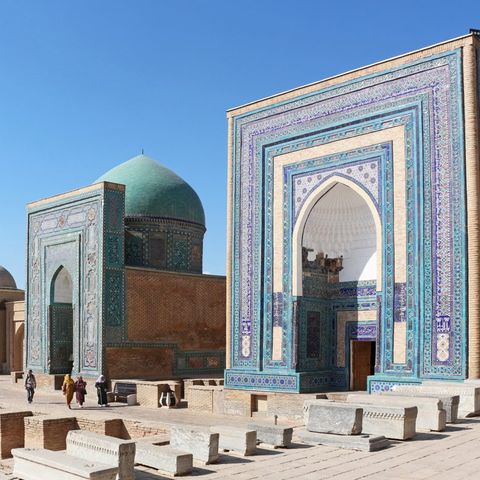
Shah-i-Zinda
The avenue of mausoleums, climbing the hill. Go early, while it’s quiet.
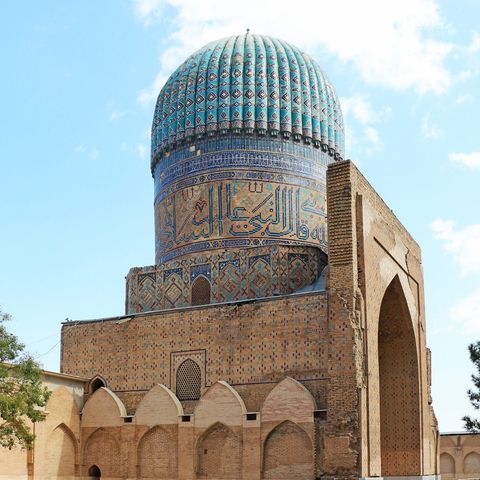
Bibi-Khanym
Timur’s great mosque, so big and built so fast that it began to crack soon after it was finished.
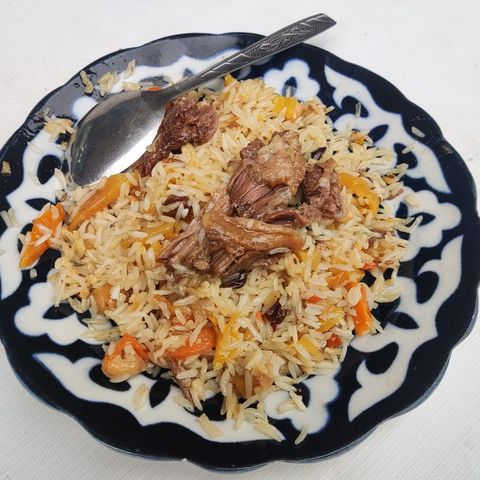
Lunch
Plov. It is always plov.
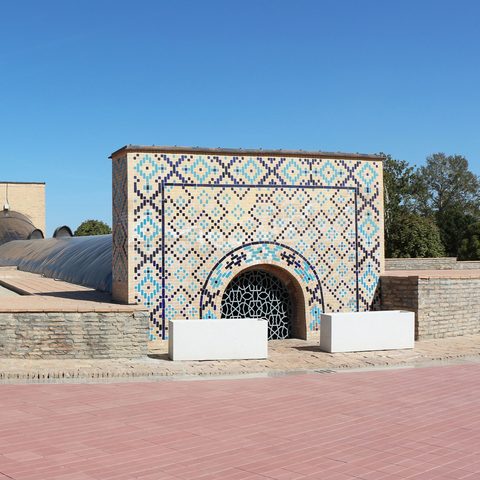
Ulugh Beg Observatory
What remains of the 1420s observatory, whose star catalogue was the most accurate between Ptolemy’s and Tycho Brahe’s.
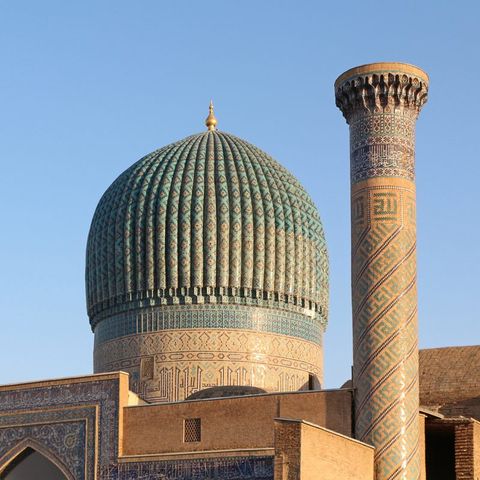
Gur-e-Amir
Timur’s tomb, under a ribbed turquoise dome.
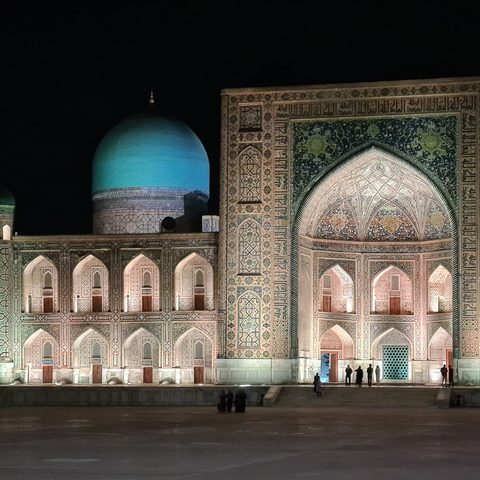
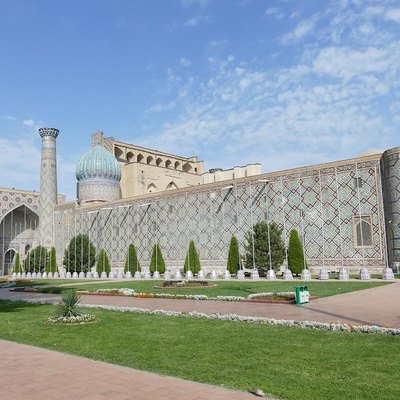
Registan
Three madrasas around one square. Come at dusk and stay until the lights come on.
You would get the seat farthest from the door.